
Event Information: Saturday 16th April

Please report by between 9.45 and 10.00 at the originally arranged point i.e. outside the Tourist Information Office (temporarily closed) at the main Glenridding  car park. You will then be re-directed to a nearby location where you can park for the whole time ( a single all day charge of £3 per vehicle is due in the box by the gate of this location).

We will then walk from this location back to Glenridding pier to start the trip. We will return to the cars for a lunch stop and then walk to the other side of the valley via Side Farm for the afternoon session. This will involve a short ascent up to a rough path which will give us fine views over the surrounding area and access to outcrops of the local volcanic rocks.

Facilities [toilets, hot drinks, shop] are available at Glenridding.  Leader John Rodgers 01768 895743  mob. 07816769918 but be aware there is poor network single around this area.

Event Reminder: Landscape and Geology around the Southwest End of Ullswater

Landscape and Geology anound the Southwest End of Ullswater on 16th April

Starting at 10:00 from Glenridding car park. This will be an opportunity to observe and possibly measure some of the changes that have taken place as a result of the severe rainfall this winter.  [ed. investigating principals of Charles Lyell] It will involve visiting a small number of locations in the area, sharing transport. Walking distance total up to 6km on tracks and paths at low level. Leader: John Rodgers

The World’s Largest Caves, by Richard Walters

The World’s Largest Caves, by Richard Walters

The speaker started with some spectacular images of the UK’s longest cave system, across the borders of Cumbria, Yorkshire and Lancashire – hence the Three Counties cave.

He explained his interest in locating, and measuring by laser, the largest cave caverns in the world. The overall largest is the Miao Room in China, where it took seven days underground to record its size.

He explained the technology which enables 3D images of the inside walls of the chambers to be produced. These images can then be rotated and linked to surface topography. After much computer manipulation, animations can show the entrance into the caves, views of the enormous stalagmite formations, and an idea of the extent of the cave, which cavers themselves cannot see at the time. Using simple diagrams, the formation of large caverns was explained.

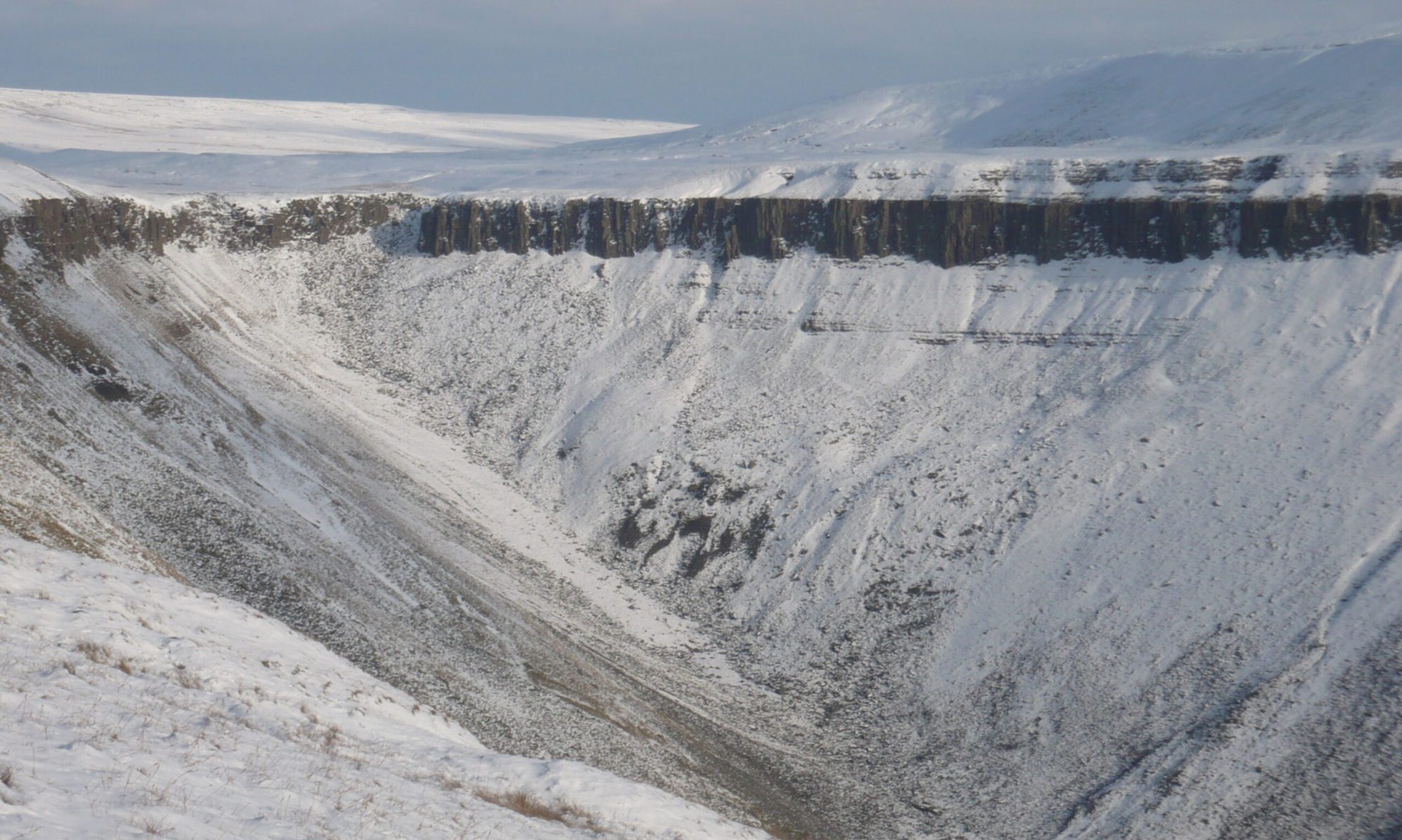
Water meeting from different channels underground becomes aggressive again, and can dissolve more limestone. Stress on the arch structure of the cavern roof was explained as keeping these enormous cavern roofs standing, while unstressed rocks collapses into loose blocks. The fate of all large cavern chambers is to collapse, especially when chambers have an open roof. Yorkshire’s Hull Pot is believed to be a collapsed cavern.

3D images of the underground workings of Nenthead mines were shown, and finally the 3D laser plotted the inside of the meeting room, together with all CGS members. It was a truly memorable illustrated talk, taking us underground without having to make any effort.

A write-up of the event on 10th February 2016 by Sylvia Woodhead.

New Events by CGS

New 2016 events have been added to our calendar. Check your newsletter, or have a look at the website Events Page here: http://www.cumberland-geol-soc.org.uk/events/

We are hosting meetings throughout the year and even have options for the ever reliable Cumbrian weather so, we expect to see you rain or shine!

Friends and non-members are encouraged. For additional information visit the events page. Should you have any questions, please contact us using the online form.

To find out more about CGS activities and latest updates you can subscribe to the free email alerts on most pages of the website.

Regards,
Cumberland Geological Society